

KARACHI: The judicial commission probing the death of Mir Raza Ali has put an end to the suicide theory. In the executive summary of its report, it says plainly that he was murdered. It calls the police handling of the case an “epic failure” and says an active cover-up in the early days of the investigation “cannot be conclusively ruled out”.
The report was submitted to the Sindh Chief Minister on October 15 by Justice Omar Sial of the Sindh High Court, who headed the one-man commission.
The case
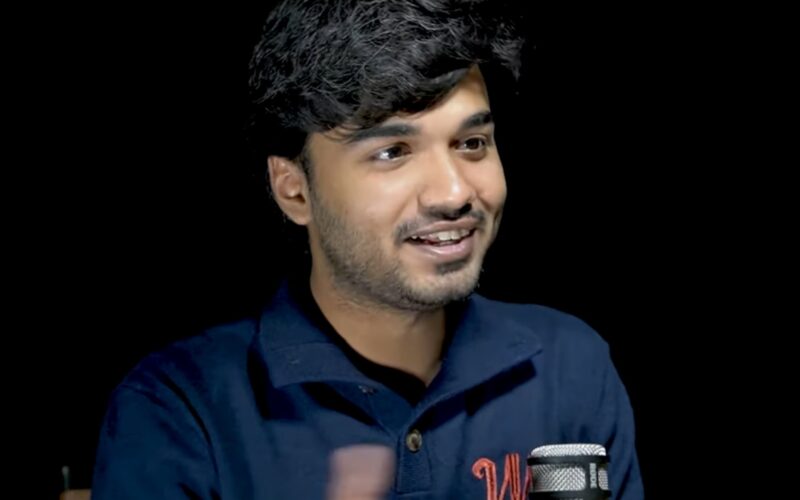
Mir Raza Ali, 25, was an IBA graduate and the founder of the dessert brand Wafflix. He left his home in PECHS in the early hours of July 28. His family reported him missing at Ferozabad police station the same day, and an FIR (No. 795/2026) was registered under Section 365 (kidnapping). His body was found on the morning of July 29 in Gulistan-e-Jauhar. It was post-mortemed at Jinnah Hospital and buried the same day.
The police quickly leaned towards suicide. The family said the body bore visible torture marks. Their claim gained weight when Karachi Police Surgeon Dr Summaiya Syed pointed out anomalies in the first post-mortem report, the one the police used as the basis for their theory. The body was exhumed on August 8. The final official report, issued around August 31, confirmed the cause of death as a perforating firearm injury from the back, which ruled out suicide. Sections 302 (murder) and 201 (destruction of evidence) were then added to the FIR.
The commission’s findings on suicide vs. murder
The commission says the police theory rested on a few unconfirmed text messages, selectively obtained video footage, and a first post-mortem report that never itself concluded suicide. The police also assumed the exit wound was at the back, and therefore that he shot himself from the front. The commission notes that the second post-mortem, issued by the same doctor, Dr Osama Shaikh, contradicted that observation. Even if the bullet had entered from the front, it adds, that would not mean he could not have been murdered.
The commission lists the bullet trajectory, the unusual location of the wound for a self-inflicted injury, the absence of blood, the state of the body, acid burns and anesthesia found in the blood. It says these all clearly excluded suicide, and puts it in three words: “It was a murder.”
It adds that even if this had been a suicide, the police should have found out who drove a young man to that point, including whether coercion, blackmail or instigation was involved. In its view they made no such effort. It also says the police were wrong to release their findings before a proper investigation, and that selected digital evidence leaked to the media, apparently from police sources, fuelled speculation and an anti-government narrative.
“A rudderless ship”: the police failures
The commission’s language on the police is harsh. It says they breached all the procedures needed to survive judicial scrutiny and support a prosecution, and that their initial response to news of the body was prompt but everything after it “left a lot to be desired”. Its observations include:
- A lack of leadership, seriousness and supervision, and in some cases negligence by senior officers. It likens the handling to a rudderless ship.
- An investigation ranging from negligent to criminally negligent, casual and unprofessional. Senior officers swept clear lapses under the carpet without acknowledging or addressing them.
- Tunnel vision and ego. After public criticism the police went into a shell, cut communication channels, and doubled down on the suicide ruling instead of investigating further.
- Too many cooks. Dozens of officers, authorized and unauthorized, collected evidence and questioned key people, mostly without documenting anything. As a result no officer takes responsibility and each blames subordinates or lives in denial.
- No honest, timely briefing for the public. The police ignored the commission’s recommendation to appoint a focal person, which deepened speculation and embarrassed both the government and the force.
The Health Department’s midnight reshuffle
The commission also turned on the Sindh Health Department over the exhumation board. On August 6, following a court order, an 8-member board headed by Dr Summaiya Syed was notified. In the early hours of August 7, the Health Directorate unilaterally replaced it with a trimmed 5-member board with many doctors from Hyderabad and Jamshoro. The family rejected it at the graveyard and the exhumation was postponed. After public pressure and a legal notice from the family, the government restored the original board on August 8 and the exhumation was completed that morning.
The commission calls the overnight change “highly irregular, inexplicable” and “legally flawed overreach”. It says it was dictated from the top of the Health Secretariat, by the Secretary and Special Secretary Health, while the DG Health Services looked the other way despite knowing he was not legally competent to form such a board. None of them could give a cogent reason for the change.
The Chief Minister’s House meeting
On August 9, senior police officers and Dr Osama met at the Chief Minister’s House, which drew speculation that he was being pressured. The commission found no evidence that this was the intention and no ulterior motive in the meeting, and says the CM was entitled to seek a briefing on a high-profile case. No witness suggested any influence from anyone acting for the Chief Minister. It does say it would have been prudent to invite the Police Surgeon too, and it accuses Dr Osama of continuing to try to make the CM House controversial and of defaming the Police Surgeon.
Recommendations
The commission says trust between the police and the public has broken down so badly that even a correct conclusion may not be accepted. It also says much of the physical evidence has been compromised, so the case can now only be solved through a rigorous, intelligence-based investigation. It recommends:
- A JIT, as the family has demanded, led by DIG Irfan Baloch with senior representatives of the ISI, IB, Sindh Rangers and NCCIA.
- A public apology from the police for their lapses and formal inquiries against the responsible officers.
- A high-level committee, preferably led by the FIA, to examine whether police officers involved in the first ten days breached Sections 201, 166(2) and 218 PPC (destruction of evidence, disobeying the law to injure someone, and framing an incorrect record). It should start criminal and disciplinary action against anyone found culpable.
The commission admits it has no investigative powers, which is why it stops short of declaring a cover-up proven.
What comes next
The Sindh government received the report in a sealed envelope and will decide whether to make it public. The family’s lawyer, Jibran Nasir, has asked for a copy to be given to the family. The commission started work on August 27, recorded statements from 50 witnesses over 20 sessions, all open to the public, and visited the crime scene on October 5.